
The Ultimate Guide to Digital Marketing for Beginners
09,13,2026|by kaja hussain
Starting your journey in digital marketing can seem intimidating.The variety of skills required from SEO to social media, email marketing, advertising, and analytics can lead to confusion as to how to start. However, the truth is that digital marketing is not as difficult to master as it may seem once you learn all the fundamental elements of it.
What Is Digital Marketing?
Digital marketing refers to the promotion of a product, service, or brand through digital marketing channels rather than the use of traditional means such as printing, television, or radio. This covers all sorts of things including your website, its ranking in search engines, social media posts, email campaigns, and even advertising.
The key advantage of digital marketing compared to traditional marketing is the ability to measure results. You can see precisely how many people viewed your marketing campaign and how many actually clicked on it. This is very difficult with traditional marketing approaches.
Core Types of Digital Marketing
Prior to exploring strategy, it is important that one understands the major channels available to him/her.
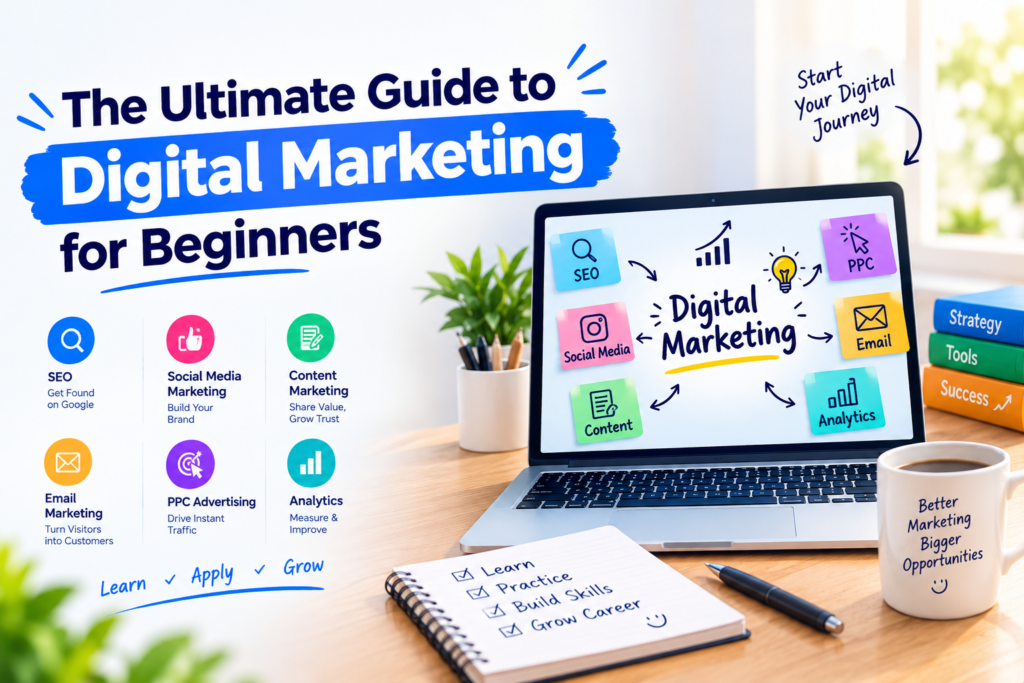
- Search Engine Optimization (SEO): Optimizing your website to perform well in organic search rankings
- Pay-Per-Click Advertising (PPC): Buying ad space on search engines and other websites
- Social Media Marketing: Being active on social media such as Instagram, Tiktok, and LinkedIn
- Email Marketing: Managing relationships through email marketing
- Content Marketing: Producing content such as blog posts, video tutorials, and how-to guides
- Affiliate and Influencer Marketing: Using affiliates and influencers to market your product to their customer base
- Analytics and Data Tracking: Monitoring metrics to help you make better decisions
A good digital marketing strategy utilizes these media through a combination approach and not just one alone.
Step 1: Define Your Goals
Every good strategy starts with clear goals. Common digital marketing goals include:
- Increasing website traffic
- Generating leads or sign-ups
- Boosting online sales
- Building brand awareness
- Improving customer retention
Your goals will shape which channels you prioritize and how you measure success, so take time to define them clearly before moving forward.
Step 2: Understand Your Audience
You can’t market effectively to everyone, so it’s important to know exactly who you’re trying to reach. Consider:
- Demographics like age, location, and income level
- Interests, hobbies, and online behavior
- Pain points and challenges your product or service solves
- Where they spend time online (social platforms, search engines, forums)
Creating a simple customer profile or “buyer persona” can help guide your messaging and channel choices.
Step 3: Build a Strong Website
Your website is often the foundation of your digital marketing efforts, since most channels eventually lead people back to it. A strong website should:
- Load quickly on both desktop and mobile devices
- Use clear menus and calls to action and make it easy to navigate
- Clearly communicate what you offer and why it matters
- Include a way to capture leads, like a contact form or email sign-up
Even the best marketing campaign will struggle to convert if it sends people to a confusing or slow website.
Step 4: Learn the Basics of SEO
SEO helps people find your website through search engines without paying for ads. As a beginner, focus on:
- Researching keywords relevant to your business
- Writing helpful, well-organized content around those keywords
- Optimizing titles, headers, and meta descriptions
- Ensuring your site is mobile-friendly and loads quickly
- Building links from other reputable websites over time
Although it requires patience, SEO is one of the best long-term investments in digital marketing.
Step 5: Get Started With Content Marketing
Content marketing works hand-in-hand with SEO by giving you material to rank in search results and share on social platforms. Beginner-friendly content ideas include:
- Blog posts answering common customer questions
- Short how-to videos
- Simple infographics explaining a process or statistic
- Case studies showing how your product solved a real problem
Consistency matters more than perfection when you’re first starting out — publishing regularly builds momentum over time.
Step 6: Explore Social Media Marketing
It helps you establish a connection with your audience and increases brand awareness.
- Stay consistent and do not spread yourself too thin on all platforms
- Be consistent with your posts and avoid being everywhere at once
- Mix promotional content with helpful or entertaining posts
- Interact with comments and messages to establish true connections
It’s better to do one platform well than to do five platforms poorly.
Step 7: Try Paid Advertising
After you know your audience and have an operational website, paying for ads may become beneficial in speeding up results. Some beginner ads are:
- Search ads targeting specific keywords
- Social media ads targeting demographics and interests
- Retargeting ads for people who’ve already visited your site
Start with a small budget, test different ad creatives and audiences, and scale up what performs best.
Step 8: Build an Email List
Email Marketing is also one of the most effective channels of Digital Marketing. Here are some tips to build an Email List:
- Offer something valuable in exchange for an email sign-up, like a guide or discount
- Add sign-up forms to your website and social profiles
- Send regular, valuable content instead of only promotional emails
- Segment your list based on interests or behavior for more relevant messaging
An engaged email list gives you a direct line to your audience that isn’t dependent on any algorithm.
Step 9: Track and Analyze Your Results
Digital marketing gives you the advantage of measurable data, so use it. Regularly review:
- Website traffic and where it’s coming from
- Conversion rates for leads or sales
- Engagement rates on social media and email
- Connect Through Comments and Messages to Form Stronger Connections
Use this data to double down on what’s working and adjust or drop what isn’t.
Step 10: Stay Consistent and Keep Learning
Digital marketing is constantly evolving, with search engine algorithms, social media trends, and advertising platforms all changing regularly. To stay effective:
- Follow reputable marketing blogs and industry news
- Test new strategies on a small scale before committing fully
- Revisit your goals and strategy every few months
- Be patient, since most digital marketing results build over time rather than overnight
Final Thoughts
Digital marketing doesn’t have to be intimidating. By breaking it down into clear steps, defining your goals, understanding your audience, and building out one channel at a time, you can create a strategy that grows with your confidence and experience.
Start small, stay consistent, and let the data guide your decisions. Over time, the small, steady efforts you put into SEO, content, social media, and email will compound into meaningful traffic, leads, and growth for your business.